How Much Does Hydroseeding Cost in Mankato MN in 2026?
- Mar 18
- 8 min read
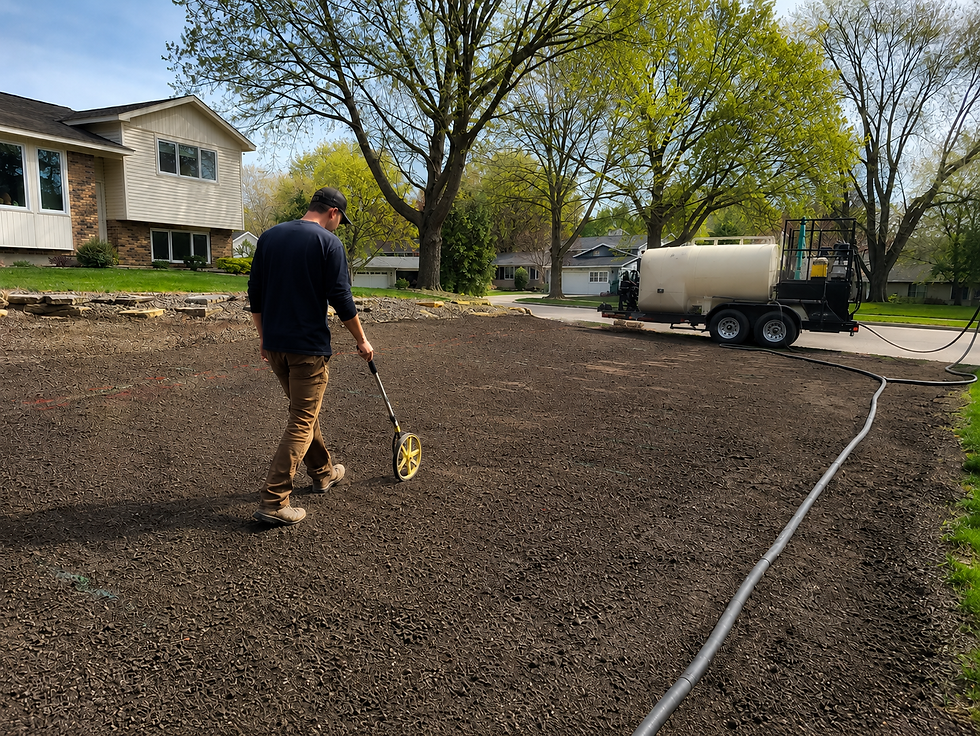
How Much Does Hydroseeding Cost in Mankato MN in 2026? Hydroseeding offers Mankato homeowners an affordable, efficient method for establishing new lawns, with costs that vary based on project size, site conditions, and specific requirements. As we move into 2026, understanding current pricing trends and factors that influence hydroseeding investment helps homeowners budget appropriately and evaluate contractor proposals. This comprehensive cost breakdown examines every component of Mankato hydroseeding projects, from basic material costs to site-specific considerations that affect final pricing.
Mankato's unique southern Minnesota environment—with its agricultural heritage, Minnesota River valley topography, and specific soil conditions—creates hydroseeding scenarios that differ from national averages or even nearby Twin Cities pricing. Local factors including soil type, water availability, and seasonal demand patterns influence costs in ways that generic estimates cannot capture.
Base Hydroseeding Costs in 2026
Standard hydroseeding pricing for Mankato in 2026 reflects material costs, labor, equipment, and contractor overhead.
Material costs include seed, mulch, fertilizer, and tackifier that comprise the hydroseed slurry. For standard Kentucky bluegrass blends suitable for most Mankato lawns, material costs run eight to fifteen cents per square foot as of 2026 pricing. Premium seed varieties with enhanced disease resistance, drought tolerance, or specific aesthetic qualities increase material costs to twelve to twenty cents per square foot. Specialized mixes for shade, high traffic, or erosion control may reach fifteen to twenty-five cents per square foot.
Mulch selection significantly affects material costs. Standard wood fiber mulch, most common for residential applications, costs four to six cents per square foot. Premium paper fiber or specialized erosion control mulches run six to ten cents per square foot. Bonded fiber matrix products for challenging sites cost ten to fifteen cents per square foot but provide superior performance.
Labor and equipment costs for application typically range from twelve to twenty cents per square foot for standard residential projects. This includes site preparation assessment, equipment mobilization, hydroseeding application, and initial watering guidance. Larger projects achieve economies of scale; smaller projects may have minimum charges that increase per-square-foot rates.
Combined base costs for standard Mankato hydroseeding in 2026 range from twenty to forty cents per square foot for typical residential applications. This translates to two hundred to four hundred dollars per thousand square feet, or two thousand to four thousand dollars for a ten-thousand-square-foot lawn.
Project Size and Scale Pricing
Hydroseeding costs vary significantly with project size due to mobilization efficiencies and minimum charges.
Small projects under two thousand square feet face minimum mobilization charges that increase per-unit costs. Contractors may charge four hundred to eight hundred dollars minimum for small residential jobs, resulting in effective rates of twenty to forty cents per square foot even for compact areas. DIY hydroseeding rental, at two hundred to three hundred fifty dollars per day plus materials, may be cost-effective for very small projects but requires proper technique for success.
Medium projects from two thousand to ten thousand square feet achieve standard pricing efficiency. Per-square-foot costs stabilize in the twenty to thirty cent range, with total project costs scaling predictably with area. This range represents most residential Mankato hydroseeding projects.
Large projects from ten thousand to fifty thousand square feet benefit from economies of scale that reduce per-unit costs. Commercial properties, acreage estates, or multi-lot developments may achieve fifteen to twenty-five cents per square foot through efficient equipment utilization and reduced mobilization relative to area. These projects require professional contractors with appropriate capacity.
Very large projects exceeding fifty thousand square feet, including commercial developments or municipal work, may negotiate pricing in the twelve to twenty cent per square foot range based on volume and project specifics. These projects typically involve competitive bidding and detailed specifications.
Site Condition Adjustments
Mankato site conditions significantly influence hydroseeding costs beyond base pricing.
Soil preparation requirements add costs when existing conditions need improvement. Minimal preparation, for sites with workable soil and good drainage, adds minimal cost. Moderate preparation including grading, debris removal, and light amendment adds five to fifteen cents per square foot. Intensive preparation for compacted construction sites, heavy clay, or poor drainage adds fifteen to thirty cents per square foot, potentially matching or exceeding base hydroseeding costs.
Slope and access challenges increase labor and equipment requirements. Gentle slopes with good access proceed at standard rates. Moderate slopes requiring specialized equipment or hand work add ten to twenty percent. Steep slopes demanding erosion control blankets, terracing, or extensive protection add twenty to fifty percent to base costs.
Water availability affects both cost and success probability. Sites with adequate water supply for establishment proceed normally. Sites requiring water delivery, temporary irrigation system installation, or extensive hose management add two hundred to five hundred dollars for water infrastructure. Non-irrigated sites in Mankato's variable summer climate face elevated failure risk that may not justify hydroseeding investment.
Timing and seasonality influence pricing through demand patterns. Peak season, late May through June, commands full pricing with limited availability. Shoulder seasons, April and July-August, may offer ten to fifteen percent reduction with increased weather risk. Late fall installations, September through October, may discount fifteen to twenty percent but carry significant winter survival risk that must be weighed against savings.
2026 Cost Trends and Inflation
Current economic conditions affect 2026 hydroseeding pricing.
Material cost inflation has increased seed, mulch, and fuel costs over recent years. 2026 pricing reflects approximately fifteen to twenty percent increase over 2020-2021 levels, with continued pressure from supply chain and agricultural input costs. Contractors have adjusted pricing to maintain viability while remaining competitive.
Labor cost increases affect service pricing throughout the landscaping industry. Skilled equipment operators and application technicians command higher wages in 2026, contributing to per-square-foot cost increases. Quality contractors invest in training and retention, costs that reflect in pricing but ensure reliable service.
Equipment and technology improvements, while adding contractor costs, improve application efficiency and success rates. Modern hydroseeding equipment with precise mixing, application control, and coverage monitoring increases initial investment but reduces waste and improves outcomes. These benefits partially offset cost increases through reduced failure and reapplication.
Additional Cost Components
Several factors may add to base hydroseeding costs.
Soil testing, recommended for optimal results, costs twenty-five to fifty dollars per sample. Two to three samples typical for residential properties add seventy-five to one hundred fifty dollars to project costs. This investment guides amendment and variety selection that improves success probability.
Erosion control additions, including silt fence, sediment barriers, or additional tackifier, add two hundred to eight hundred dollars depending on site requirements. These measures, while adding cost, prevent expensive washout failure on vulnerable sites.
Starter fertilizer and soil amendment, beyond standard hydroseeding nutrients, may be recommended based on testing. These additions cost fifty to two hundred dollars for typical residential projects but provide establishment benefits that justify investment.
Follow-up and warranty services vary by contractor. Some include establishment monitoring and spot reseeding in base price; others charge separately for these services. Clarify warranty terms and any additional costs for follow-up work.
Total Project Cost Examples
Realistic 2026 scenarios illustrate total Mankato hydroseeding investment.
Small urban lot, one thousand square feet, good soil, standard timing: Base hydroseeding three hundred dollars, minimal preparation, soil testing seventy-five dollars, total approximately three hundred seventy-five dollars. Minimum charges may increase this to four hundred to five hundred dollars effective cost.
Typical suburban property, five thousand square feet, moderate clay soil, spring installation: Base hydroseeding one thousand two hundred fifty dollars, soil preparation five hundred dollars, soil testing one hundred dollars, erosion control two hundred fifty dollars, total approximately two thousand one hundred dollars, or forty-two cents per square foot.
Large rural property, twenty thousand square feet, heavy clay construction site, intensive preparation: Base hydroseeding five thousand dollars, extensive soil preparation four thousand dollars, drainage improvements one thousand five hundred dollars, soil testing two hundred dollars, bonded fiber matrix upgrade one thousand dollars, total approximately eleven thousand seven hundred dollars, or fifty-nine cents per square foot.
Commercial property, fifty thousand square feet, competitive bidding, favorable timing: Base hydroseeding ten thousand dollars, moderate preparation three thousand dollars, total approximately thirteen thousand dollars, or twenty-six cents per square foot with volume pricing.
Value Comparison: Hydroseeding vs. Alternatives
Cost evaluation requires comparison with alternative establishment methods.
Seeding, at five to fifteen cents per square foot for materials, appears cheaper but requires extensive labor and carries high failure risk. Successful seeding with professional preparation often approaches hydroseeding costs when labor and risk are valued. Failed seeding, common in Mankato conditions, doubles or triples apparent costs through reseeding.
Sod installation, at one dollar fifty to three dollars per square foot installed, costs five to ten times more than hydroseeding. For immediate results, erosion control, or guaranteed coverage, sod justifies premium pricing. For budget-conscious projects with flexible timelines, hydroseeding provides comparable ultimate results at fraction of cost.
Artificial turf, at five to fifteen dollars per square foot installed, exceeds hydroseeding costs by orders of magnitude. While eliminating maintenance, artificial turf provides different functionality and aesthetic that many homeowners reject.
Cost Management Strategies
Homeowners can optimize hydroseeding value without compromising success.
Timing flexibility around shoulder seasons may yield modest savings, though weather risk increases. Early spring or late summer installations, when contractors seek to fill capacity, may offer ten to fifteen percent reduction from peak pricing.
Site preparation by homeowner, where capability permits, reduces contractor costs. Grading, debris removal, and rough preparation within homeowner skill set may save five to fifteen cents per square foot. However, professional preparation ensures quality that protects larger hydroseeding investment.
Phased installation spreads costs and allows learning. Establish priority areas first; observe success before committing to full scope. This approach reduces risk and allows budget flexibility.
Competitive bidding from multiple qualified contractors ensures market pricing. Evaluate bids carefully for equivalent specifications, preparation scope, and warranty terms. Lowest bid may reflect inadequate preparation or hidden costs.
Frequently Asked Questions
What does hydroseeding cost per square foot in Mankato in 2026?
Twenty to forty cents per square foot for typical residential projects, with variation based on size, site conditions, and timing. Large or complex projects may range fifteen to sixty cents per square foot.
Is hydroseeding cheaper than sod?
Yes, significantly. Hydroseeding costs one-tenth to one-fifth of sod installation, though results require weeks to months rather than immediate coverage.
Does 2026 inflation affect hydroseeding costs?
Yes, material and labor cost increases have raised prices approximately fifteen to twenty percent over recent years. Quality and success rates have improved with technology investment.
What adds most to hydroseeding costs?
Site preparation for challenging soils, particularly heavy clay common in Mankato, often matches or exceeds base hydroseeding costs. This preparation is essential for success.
Can I save money with DIY hydroseeding?
Rental equipment and self-application may reduce costs for small, simple sites. However, technique errors common with inexperienced applicators cause failure that eliminates savings.
Are there hidden costs in hydroseeding?
Soil testing, preparation, erosion control, and follow-up services may add to base pricing. Detailed proposals should clarify all components.
How do I get accurate cost estimates?
Site-specific assessment by qualified contractors provides accurate pricing. Phone estimates without site visit cannot account for preparation needs that significantly affect cost.
Does timing affect hydroseeding cost?
Yes, peak season commands premium pricing; shoulder seasons may offer modest discounts with increased weather risk. Late fall discounts carry significant survival risk.
Is hydroseeding worth the cost compared to seeding?
For most Mankato projects, yes. Improved success rates, reduced labor, and faster establishment justify modest premium over hand seeding.
What warranty or follow-up costs should I expect?
Clarify with contractors whether establishment monitoring and spot reseeding are included or charged separately. Warranty terms vary significantly.
Ready to invest in hydroseeding for your Mankato property with clear understanding of 2026 costs and value? Mankato Sod & Hydroseed provides transparent, detailed proposals that account for every cost component—from base materials and application through site-specific preparation and follow-up services. Our team understands that accurate budgeting requires honest assessment of your site's conditions, not just square footage, and we deliver proposals that reflect the real investment necessary for success on your specific soil, slope, and timing. We don't minimize costs to win bids; we specify appropriate scope and execute with the expertise that prevents expensive failures and reapplication. Whether your project is modest residential lawn or extensive commercial development, we provide competitive 2026 pricing with the quality and warranty protection that ensures your hydroseeding investment establishes successfully. Contact Mankato Sod & Hydroseed today for your site-specific cost estimate and discover how professional hydroseeding delivers beautiful lawn results at fraction of sod cost.
Mankato Sod & Hydroseed: https://www.mankatosodandhydroseed.com/


Comments