What Is the Best Way to Measure for Hydroseeding in North Mankato MN?
- 7 days ago
- 4 min read
Hydroseeding is one of the most affordable and efficient ways to establish a healthy lawn in North Mankato, Minnesota. Whether you’re installing grass on a new construction property, repairing a damaged yard, or improving a large commercial space, accurate measurements are critical before beginning any hydroseeding project.
Proper measurement affects:
Project pricing
Seed quantity
Mulch coverage
Fertilizer calculations
Watering requirements
Overall lawn performance
Many homeowners underestimate or overestimate lawn size, which can lead to inaccurate estimates, uneven application, or unexpected costs. Understanding the best way to measure for hydroseeding in North Mankato MN can help ensure your lawn project stays efficient, cost-effective, and successful.
Why Accurate Measurements Matter for Hydroseeding
Hydroseeding contractors typically price projects based on:
Square footage
Terrain difficulty
Slope conditions
Soil preparation needs
Seed blend selection
If measurements are incorrect, homeowners may encounter:
Inaccurate estimates
Insufficient seed coverage
Uneven lawn growth
Additional material costs
Precise measurements also help contractors calculate:
Proper hydroseed slurry volume
Fertilizer rates
Irrigation recommendations
Erosion control needs
What Areas Should Be Measured?
Before hydroseeding, homeowners should identify every area that requires grass coverage.
Common areas include:
Front yards
Backyards
Side yards
Drainage swales
Hillsides
Boulevards
Newly graded construction areas
Exclude areas such as:
Driveways
Patios
Decks
Sidewalks
Landscaping beds
Pools
Accurate measurements improve overall project planning.
Best Ways to Measure for Hydroseeding in North Mankato MN
1. Measure by Square Footage
The most common and accurate method is calculating square footage.
Basic Formula
Length × Width = Square Feet
For example:
100 feet × 50 feet = 5,000 square feet
This works well for:
Rectangular lawns
Flat yards
Open spaces
2. Divide Irregular Shapes Into Sections
Many residential properties in North Mankato have:
Curved property lines
Sloped areas
Landscaping islands
Uneven yard layouts
Instead of measuring the entire yard at once:
Break the property into smaller rectangles or sections
Measure each section individually
Add the totals together
This creates much more accurate estimates.
3. Use Property Surveys or Site Plans
New construction homes often include:
Site plans
Lot surveys
Builder grading plans
These documents can help estimate lawn areas quickly.
However, homeowners should still verify:
Landscaping changes
Hardscape additions
Final grading adjustments
before hydroseeding begins.
4. Online Mapping Tools
Satellite measurement tools such as:
Google Earth
GIS property maps
Landscape design apps
can help estimate lawn size.
These tools are useful for:
Preliminary estimates
Large properties
Difficult terrain
Professional contractors may still perform onsite measurements for accuracy.
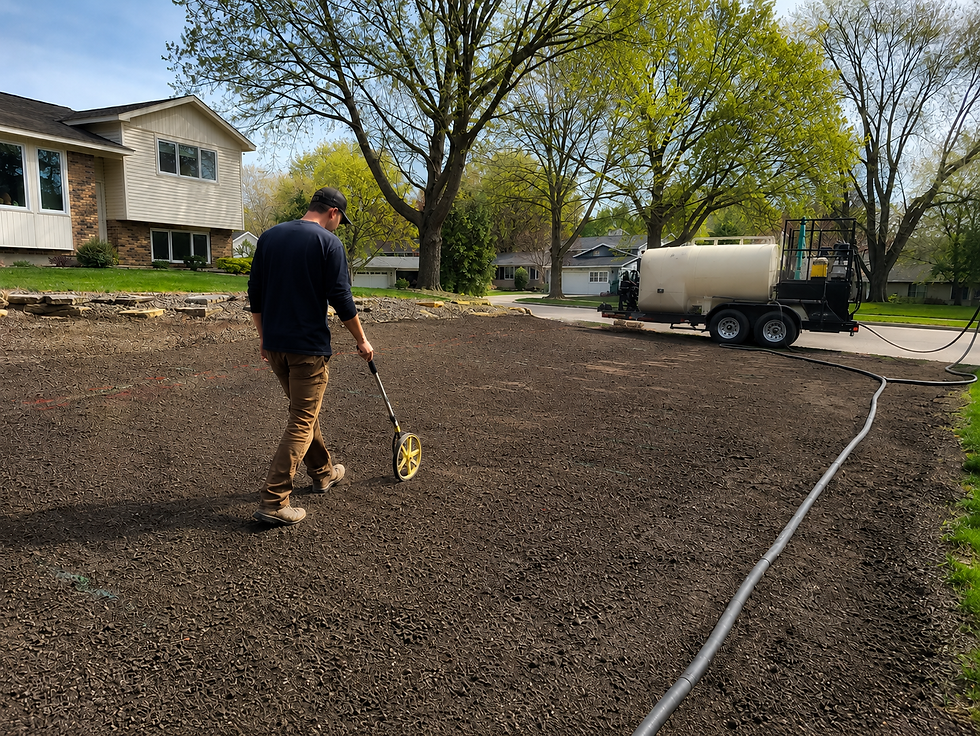
5. Professional Site Measurement
The most reliable option is hiring a professional hydroseeding contractor to measure the property directly.
Professional measurement accounts for:
Slopes
Elevation changes
Soil conditions
Drainage concerns
Access limitations
This often produces the most accurate project estimate.
Average Hydroseeding Costs in North Mankato MN
Hydroseeding remains significantly more affordable than sod installation.
Typical Hydroseeding Costs
Project Type | Estimated Cost |
Small residential lawn | $1,500–$4,000 |
Medium lawn installation | $4,000–$8,000 |
Large property or acreage | $8,000–$20,000+ |
Average Cost Per Square Foot
Hydroseeding: $0.10–$0.30 per sq. ft.
Sod installation: $1.00–$2.50 per sq. ft.
Final pricing depends on:
Lawn size
Soil preparation
Seed blend
Erosion control
Water access
Terrain difficulty
Climate Considerations in North Mankato MN
Minnesota’s climate creates several hydroseeding challenges that affect project planning and measurement.
Sloped Terrain and Drainage
Many North Mankato properties feature:
Rolling hills
Drainage swales
Uneven terrain
Sloped areas may require:
Additional hydroseed material
Erosion blankets
Tackifier
Soil stabilization
Accurate measurements help contractors calculate proper coverage.
Spring Rainfall
Heavy spring rain can:
Wash seed downhill
Create erosion
Shift mulch
Large drainage areas often require specialized hydroseeding techniques.
Summer Heat
Hydroseeding during hot weather requires:
Increased irrigation
Moisture monitoring
Proper seed selection
Larger lawns may need irrigation system planning before installation.
Common Homeowner Mistakes When Measuring
1. Guessing Lawn Size
Estimating visually often produces inaccurate numbers.
A lawn that appears small may actually contain:
10,000+ square feet
Multiple elevation changes
Additional drainage areas
2. Forgetting Slopes
Steep hillsides increase:
Material requirements
Labor time
Erosion control costs
3. Including Non-Grass Areas
Patios, sidewalks, and mulch beds should not be included in hydroseed calculations.
4. Ignoring Future Landscaping
Homeowners should finalize:
Trees
Retaining walls
Garden beds
Hardscaping
before measuring for hydroseeding.
Best Time to Hydroseed in North Mankato
The ideal hydroseeding seasons are:
Spring (May–June)
Early fall (August–September)
These periods offer:
Moderate temperatures
Better moisture conditions
Reduced heat stress
Fall hydroseeding often produces excellent root development before winter.
Why Professional Measurement Helps
Professional contractors can identify issues homeowners may overlook, including:
Drainage concerns
Soil compaction
Irrigation limitations
Erosion risks
Access problems
This improves:
Estimate accuracy
Lawn quality
Long-term performance
Frequently Asked Questions
1. What is the best way to measure for hydroseeding?
Square footage measurement is the most accurate method.
2. How do I calculate lawn square footage?
Multiply length by width for each section of the yard.
3. Can I use Google Maps to measure my lawn?
Yes, online mapping tools can help estimate lawn size.
4. Does slope affect hydroseeding cost?
Yes. Steeper slopes often require more labor and erosion control.
5. How much does hydroseeding cost in North Mankato?
Most projects range from $1,500–$20,000+ depending on size and conditions.
6. Is hydroseeding cheaper than sod?
Yes. Hydroseeding is significantly more affordable.
7. Should drainage areas be included in measurements?
Yes, if grass coverage is planned in those areas.
8. When is the best time to hydroseed in Minnesota?
Spring and early fall usually provide ideal growing conditions.
9. Do contractors verify measurements?
Most professional hydroseeding companies perform onsite measurements
before final pricing.
10. Why is accurate measurement important?
It helps ensure proper seed coverage, pricing accuracy, and project planning.
Contact Our North Mankato MN Hydroseeding Team
Accurate measurements are one of the most important parts of a successful hydroseeding project. Proper planning helps ensure even lawn coverage, accurate pricing, and long-term lawn health in Minnesota’s challenging climate.
Our North Mankato hydroseeding and lawn installation specialists provide professional hydroseeding, grading, erosion control, sod installation, and lawn restoration services throughout southern Minnesota.
Whether you need a small residential lawn or a large erosion-control project, our team can provide accurate measurements and customized solutions designed for your property.
Contact us today to schedule your hydroseeding consultation and receive a customized estimate for your lawn project.


Comments