How to Handle Pet Damage to Hydroseeding in Albert Lea, MN
- May 22
- 6 min read
Hydroseeding is one of the most cost-effective ways to establish a new lawn in Albert Lea, Minnesota. It is commonly used for residential yards, new construction properties, large open areas, and lawns where homeowners want strong grass establishment without the higher upfront cost of sod.
However, one of the most common challenges after hydroseeding is pet damage. Dogs walking, running, digging, or urinating on newly hydroseeded areas can disturb seed, thin out coverage, create bare spots, and delay establishment.
For homeowners in Albert Lea and the surrounding southern Minnesota area, knowing how to prevent and repair pet damage can make the difference between a patchy lawn and a healthy, even stand of grass.
Why Pets Can Damage New Hydroseeding
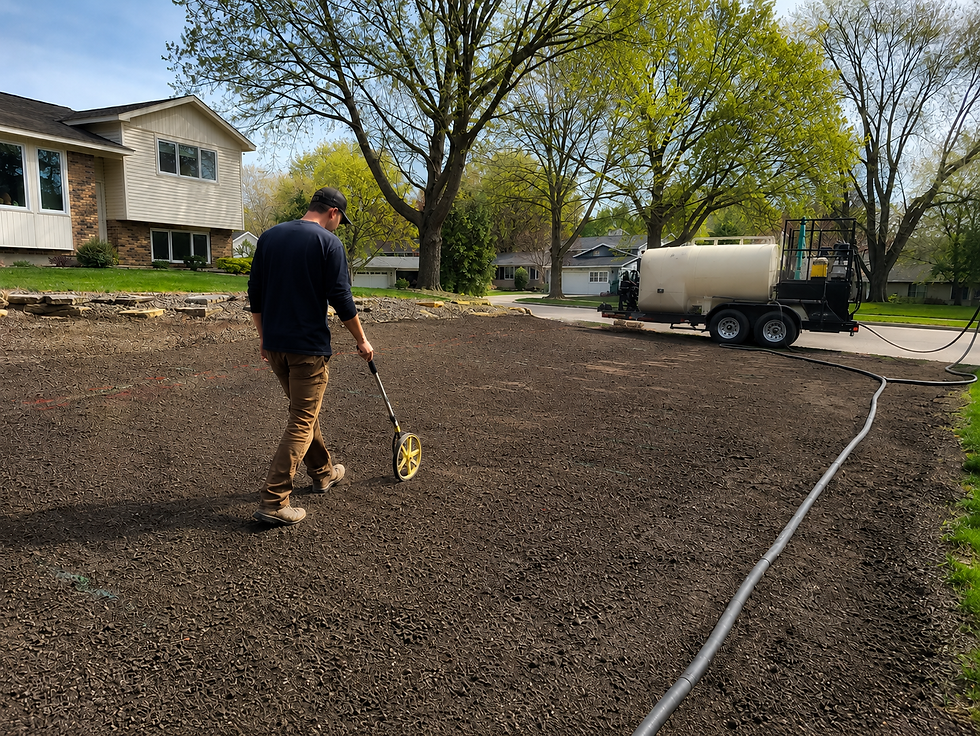
Hydroseeding works by applying a mixture of grass seed, mulch, fertilizer, tackifier, and water over prepared soil. This slurry helps hold seed in place and supports germination. However, the area remains vulnerable until the seed germinates and roots begin anchoring into the soil.
Pet damage usually happens in several ways:
Foot traffic presses seed into uneven patterns
Running creates ruts or scuffed soil
Digging removes seed and mulch
Urine causes yellowing or burn spots
Repeated traffic prevents seedlings from establishing
Waste left on the lawn damages young grass
Unlike mature turf, new hydroseeded lawns do not have established roots or dense grass blades to recover quickly. Early damage can create thin areas that may need reseeding.
How Long Should Pets Stay Off Hydroseeded Areas?
Ideally, pets should stay completely off hydroseeded areas until the lawn has established enough to tolerate light use.
A practical timeline is:
First 2–3 weeks: keep pets completely off the hydroseeded area
Weeks 3–6: allow very limited, supervised access only if grass is filling in
After 6–8 weeks: gradually return to normal use if the lawn is rooted and healthy
Actual timing depends on weather, watering, seed mix, soil conditions, and how quickly the grass germinates. The University of Minnesota Extension notes that successful lawn seeding depends heavily on good seed-to-soil contact and proper timing, with late summer often being the best seeding window in Minnesota.
Create a Temporary Pet-Free Zone
The best way to prevent pet damage is to block access before problems start.
Homeowners can use:
Temporary fencing
Snow fence
Landscape stakes and caution tape
Portable dog exercise pens
Designated walking paths
Leash-only access near the lawn
For homes with dogs, it is often worth setting up a temporary potty area using mulch, gravel, straw, or an older section of lawn. This prevents repeated urine damage and foot traffic across the newly seeded area.
Watering Matters After Pet Damage
Proper watering is already critical for hydroseeding, but it becomes even more important if pets have disturbed the surface.
New hydroseed should stay consistently moist, not flooded. Light, frequent watering is usually best during early germination. If pets leave footprints, ruts, or scuffed areas, watering can either help settle the seed back in place or make the damage worse if the soil becomes muddy.
Avoid letting pets onto wet hydroseeded soil. Soft, saturated ground is much more likely to compact, rut, or tear under paw traffic.
How to Repair Paw Prints and Light Surface Damage
Minor pet damage can often be corrected without starting over.
For shallow paw prints or light scuffing:
Let the area dry slightly if it is muddy.
Lightly rake the damaged section.
Smooth the soil without removing too much mulch.
Add matching grass seed if needed.
Cover with a thin layer of mulch, straw, or hydroseed patch material.
Resume careful watering.
Avoid aggressively raking large areas. Disturbing the entire seedbed can create more uneven germination.
How to Repair Digging Damage
Digging usually causes more serious damage because it removes seed, mulch, and prepared soil.
To repair a dug-up area:
Remove loose debris
Relevel the soil
Lightly compact the repaired area
Add topsoil if needed
Reseed with a matching seed mix
Apply mulch or erosion blanket
Water consistently
If your dog repeatedly digs in the same area, physical barriers may be necessary until the lawn is fully established.
How to Handle Dog Urine Spots on New Hydroseeding
Dog urine can burn young grass because it contains concentrated nitrogen and salts. Mature lawns can sometimes recover, but new seedlings are much more sensitive.
If urine spots appear:
Flush the area with water as soon as possible
Avoid adding extra fertilizer to the damaged spot
Let the grass recover if damage is light
Reseed if the area turns bare
Train pets to use a separate area during establishment
Repeated urine exposure is one of the fastest ways to ruin a newly hydroseeded lawn.
Hydroseeding Repair Costs in Albert Lea, MN
Repair costs depend on the size and severity of the damage.
Typical pricing ranges:
Small patch repair: $100–$300
Moderate reseeding or hydroseed touch-up: $300–$1,000+
Larger damaged areas: $1,000–$3,000+
Full hydroseeding projects: $0.07–$0.25 per sq. ft.
National hydroseeding cost ranges commonly fall around $0.07–$0.26 per square foot depending on project size, grass type, and site complexity.
Additional costs may include:
Topsoil: $40–$80 per cubic yard installed
Grading correction: $900–$5,000+
Erosion blanket: $0.50–$2.00 per sq. ft.
Temporary fencing: $100–$500+
For small pet-damaged areas, repair is usually affordable. For large areas damaged repeatedly, prevention is much cheaper than rework.
Albert Lea Climate Considerations
Southern Minnesota’s climate affects how quickly hydroseeding recovers from pet damage.
Spring hydroseeding can be successful, but heavy rain, cool soil, and muddy conditions can make pet traffic more damaging. Summer hydroseeding requires more watering, and dogs can create damage faster when soil is wet from irrigation. Early fall is often one of the best seasons because soil remains warm, temperatures are cooler, and weed pressure is lower.
Common Albert Lea lawn challenges include:
Clay-heavy soils
Spring rain and runoff
Hot summer afternoons
Humid conditions
Freeze-thaw cycles
New construction compaction
Because hydroseeded lawns need time to establish before heavy use, timing the project around pets and weather is important.
Should Pet Owners Choose Sod Instead?
For homeowners with active dogs, sod may sometimes be a better option than hydroseeding.
Sod provides:
Immediate lawn coverage
Better short-term erosion control
Faster usability
Less exposed soil
However, sod is more expensive, typically ranging from $1–$3 per sq. ft. installed. Hydroseeding remains more affordable but requires more patience and protection during establishment.
A professional contractor can help determine whether hydroseeding, sod, or a combination of both is best for your yard.
Common Homeowner Concerns
“Can my dog walk on hydroseed?”
Not during the early establishment period. Pets should stay off the area as much as possible for at least the first few weeks.
“Will paw prints ruin hydroseeding?”
Light paw prints may be repairable, but repeated traffic can thin out growth and create bare spots.
“Can dog urine kill new grass?”
Yes. New seedlings are especially sensitive to urine burn.
“How soon can pets use the lawn normally?”
Most lawns need 6–8 weeks before normal pet use, depending on growth and rooting.
“Can damaged hydroseed be repaired?”
Yes. Most pet damage can be repaired with reseeding, patching, or hydroseed touch-ups.
Frequently Asked Questions
1. How long should dogs stay off hydroseed in Albert Lea, MN?
Ideally, dogs should stay off newly hydroseeded areas for at least 3–6 weeks, with normal use delayed until the lawn is well established.
2. What happens if my dog walks on fresh hydroseed?
A few light paw prints may not ruin the lawn, but repeated traffic can disturb seed and cause bare areas.
3. Can hydroseed recover from pet damage?
Yes, minor damage can recover. Larger damaged areas may require reseeding or professional repair.
4. How do I stop my dog from digging in hydroseed?
Use temporary fencing, supervised access, and a designated pet area until the lawn is established.
5. Does dog urine damage new hydroseed?
Yes. New grass is more vulnerable to urine burn than mature turf.
6. Should I water urine spots?
Yes. Flushing urine spots with water quickly can reduce damage.
7. Is sod better than hydroseeding for dog owners?
Sod may be better for active dogs because it establishes faster, but hydroseeding is more affordable for larger areas.
8. How much does hydroseeding cost in Albert Lea?
Most hydroseeding projects range from $0.07–$0.25 per sq. ft., depending on size, soil prep, and site conditions.
9. When is the best time to hydroseed with pets?
Early fall is often ideal because cooler weather supports establishment and reduces heat stress.
Protect Your New Hydroseeded Lawn Today
Need help repairing pet damage or planning a pet-friendly hydroseeding project in Albert Lea, MN? Our Sod & Hydroseeding team can recommend the right seed mix, repair plan, watering schedule, and protection strategy for your yard. Contact us today for a free estimate and professional hydroseeding services built for southern Minnesota conditions.


Comments