How to Prepare Soil for Sod Installation in Mankato MN
- Mar 16
- 8 min read
How to Prepare Soil for Sod Installation in Mankato MN. The success of your Mankato sod installation depends more on what happens before the sod arrives than on the installation itself. Proper soil preparation creates the foundation that determines whether your instant lawn thrives for decades or struggles from the first season. In Mankato's unique southern Minnesota environment—with its agricultural heritage, Minnesota River valley topography, and clay-heavy soils—preparation requirements differ significantly from generic guidelines. Understanding these specific conditions and appropriate preparation techniques ensures your sod investment delivers the lasting performance you expect.
Mankato's soil conditions, shaped by thousands of years of prairie grassland and intensive agricultural use, present both challenges and opportunities for sod establishment. The heavy clay soils that make this region agriculturally productive also make residential lawn establishment demanding. However, proper preparation transforms these challenging soils into ideal growing media that support deep-rooted, drought-tolerant turf.
Initial Site Assessment
Effective preparation begins with understanding your specific site conditions.
Soil testing provides objective data that guides amendment decisions. The University of Minnesota Soil Testing Laboratory offers comprehensive analysis for seventeen to thirty-seven dollars per sample, measuring pH, phosphorus, potassium, organic matter, and other critical parameters. For Mankato sod preparation, test front yard, backyard, and any distinct areas separately, as conditions vary across typical residential lots. Results include specific recommendations for sod establishment that eliminate guesswork.
Drainage evaluation identifies problem areas requiring intervention. Observe water movement during rainfall or snowmelt; note areas where water pools, flows, or fails to infiltrate. Mankato's clay soils drain slowly, and construction disturbance often worsens drainage. Understanding drainage patterns before preparation allows correction that prevents future sod failure.
Existing vegetation assessment determines removal strategy. Healthy turf may be incorporated with proper preparation; weedy or diseased vegetation requires complete elimination. Construction debris, buried materials, or compacted zones from previous activity must be identified and addressed.
Slope analysis influences preparation approach. Mankato's river valley and upland terrain creates varied topography. Steep slopes require erosion control consideration and may need terracing or retaining wall integration. Grade changes affect drainage and may influence sod variety selection.
Vegetation and Debris Removal
Complete clearing creates clean slate for sod establishment.
Existing turf removal, when necessary, can be accomplished through multiple methods. Sod cutting removes turf with minimal soil disturbance, suitable for small areas or when existing grass is healthy. Herbicide application, followed by removal of dead material, suits larger areas or weedy vegetation.
Solarization, using clear plastic to kill vegetation through heat, provides non-chemical option for patient homeowners.
Weed elimination must be thorough, as perennial weeds survive sod installation and emerge through new turf. Dandelion, quackgrass, thistle, and bindweed require complete root removal or extended elimination periods. Rushing this step guarantees future weed problems that compromise sod appearance.
Construction debris removal addresses buried materials that impede rooting and create surface irregularities. Concrete chunks, wood, drywall, and other construction waste must be excavated and removed. Even small debris pieces create settlement problems that appear as sod depressions or failures.
Rock and root removal prepares smooth, consistent surface. Mankato's agricultural soils may contain field stones from historic clearing; construction may have buried materials. Tree and shrub roots from removed vegetation must be extracted or ground to prevent future decay and settlement.
Grading and Drainage Establishment
Proper surface configuration prevents water problems that destroy sod.
Rough grading establishes overall slope and contour. Mankato sod requires minimum one percent slope—one foot drop per hundred feet—for surface drainage. Steeper slopes may need terracing or specialized stabilization. Grade away from structures, toward appropriate drainage areas, avoiding low spots that collect water.
Swale and drainage feature construction manages concentrated water flow. Where downspouts, sump pumps, or natural drainage concentrates flow, swales or French drains prevent erosion and waterlogging. These features must be established before final preparation to prevent disturbing completed sod bed.
Final grading creates smooth, even surface ready for soil amendment. Remove high spots, fill low areas, and create uniform plane that will accept sod evenly. Surface should be firm enough to support foot traffic without sinking, yet loose enough to allow root penetration.
Compaction assessment identifies areas requiring tillage. Construction equipment traffic, even from years past, may have created hardpan layers that resist root penetration. Probe with steel rod or shovel to identify compacted zones requiring deep loosening.
Soil Amendment and Improvement
Transforming Mankato's native clay into sod-ready soil requires strategic amendment.
Organic matter incorporation provides the most significant improvement for clay soils. Compost, aged manure, or other organic materials break up clay structure, improve drainage, and enhance nutrient availability. Apply two to four inches of compost over the surface and incorporate to six to eight inch depth. This investment transforms soil structure and supports the biological activity that maintains long-term soil health.
Tillage depth and technique affects amendment effectiveness. Rototilling to six to eight inches provides adequate depth for sod root establishment. Till when soil moisture allows crumbling—neither sticky-wet nor powder-dry. Multiple passes may be needed to achieve uniform texture and amendment distribution.
pH adjustment, guided by soil testing, creates favorable chemical environment. Mankato soils often test alkaline, potentially limiting nutrient availability.
Elemental sulfur or acidifying amendments lower pH toward the 6.0 to 7.0 range optimal for turfgrass. This adjustment requires months to take effect, so plan ahead of sod installation.
Nutrient balancing addresses deficiencies identified in soil testing. Phosphorus, critical for root establishment, may need supplementation even when general fertility seems adequate. Potassium supports stress tolerance and winter hardiness. Apply recommended nutrients and incorporate during tillage.
Drainage improvement for poorly drained sites may require subsoil modification. Deep ripping or chisel plowing breaks up hardpan layers; drainage tile installation may be warranted for severely wet conditions. These intensive interventions address problems that surface amendment cannot resolve.
Final Preparation and Finishing
Last steps before sod arrival ensure optimal installation conditions.
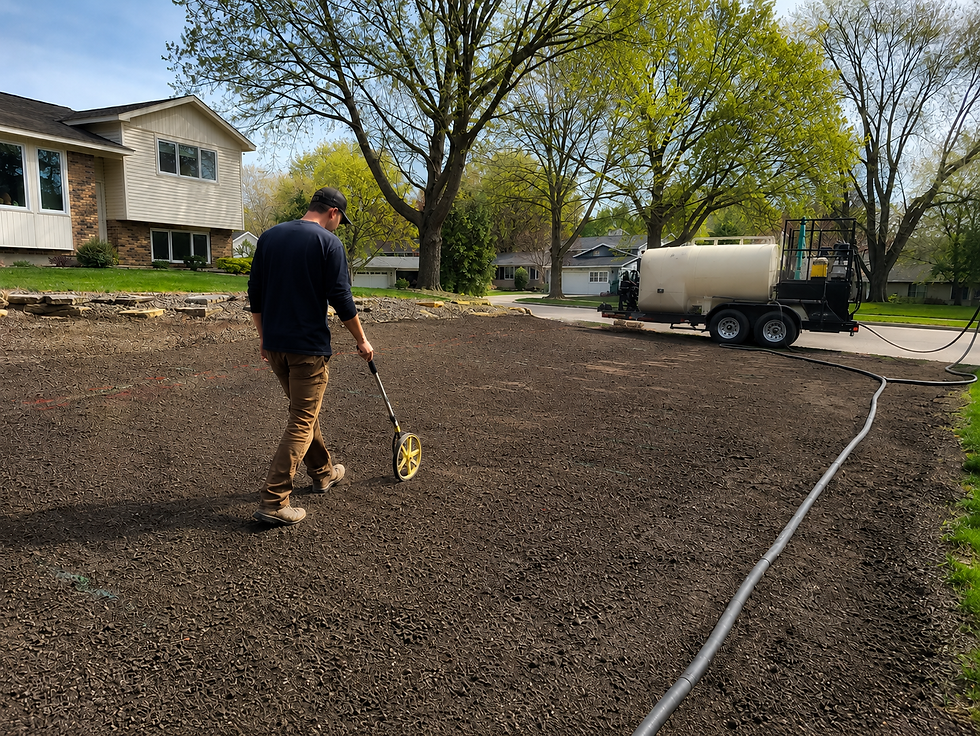
Surface smoothing creates uniform, debris-free bed. Rake to remove large clods, stones, and remaining debris. The surface should feel firm when walked upon, with slight give indicating appropriate looseness for root penetration.
Firming settles soil and identifies soft spots requiring additional attention.
Light rolling with water-ballast roller, or simply walking the surface, reveals areas that need additional compaction or filling. The goal is firm, stable surface that won't settle unevenly after sod installation.
Moisture preparation ensures appropriate water content at installation. Soil should be moist but not saturated—damp enough to support root growth, dry enough to allow equipment and foot traffic without compaction damage. Pre-irrigation may be necessary if weather has been dry.
Edge and border definition establishes clean lines for sod installation. Walk boundaries, identify where sod will meet existing features, and ensure smooth transitions. This preparation allows efficient installation and professional appearance.
Timing coordination ensures prepared soil doesn't sit too long before sod arrival. Ideally, complete preparation within one to two days of sod delivery. Extended waiting allows weed germination, surface crusting, or moisture loss that compromise installation quality.
Equipment and Labor Considerations
Proper preparation requires appropriate tools and effort.
Equipment needs vary by project scale. Small areas may be prepared with hand tools—shovels, rakes, garden forks. Medium areas benefit from rototiller rental. Large areas or compacted sites may require tractor-mounted equipment or professional preparation services.
Physical demands of preparation are substantial. Excavation, tillage, and material spreading require significant labor. Realistic assessment of personal capacity, or arrangement of adequate help, prevents incomplete preparation that compromises sod success.
Professional preparation services may be justified for challenging sites or large areas. Mankato Sod & Hydroseed offers comprehensive preparation that ensures quality results. The investment in professional preparation often protects larger sod investment and prevents costly failures from inadequate site work.
Mankato-Specific Considerations
Local factors influence preparation requirements.
Agricultural soil history means most Mankato sites have been disturbed, compacted, or modified from native condition. Assumptions about soil quality based on surrounding farmland are unreliable; site-specific evaluation is essential.
River valley topography creates drainage and erosion considerations that upland sites avoid. Valley sites may need more intensive drainage improvement; upland sites may face different compaction patterns.
Former wetland or floodplain areas, common in Mankato's river corridor, present extreme drainage challenges that standard preparation cannot address. These sites require specialized approaches or alternative landscaping strategies.
Construction timing and soil conditions interact; spring preparation may encounter wet conditions that delay work, while summer preparation faces dust and hard soil. Flexible scheduling around optimal soil conditions improves results.
Common Preparation Mistakes
Avoiding typical errors prevents sod failure.
Inadequate depth of preparation, with shallow tillage that doesn't address subsoil compaction, creates shallow root zones vulnerable to drought and winter kill. Deep preparation to six to eight inches is essential.
Over-amendment with excessive organic matter creates overly loose, unstable soil that settles unevenly after sod installation. Balance amendment rates to improve structure without creating instability.
Poor drainage correction, ignoring observed water movement patterns, guarantees future sod problems. Address drainage before sod installation; correction after installation is disruptive and expensive.
Rushed preparation without proper vegetation elimination, debris removal, or grading refinement creates problems that appear within the first season. Patience in preparation prevents costly remediation.
Frequently Asked Questions
How deep should I till for sod installation in Mankato?
Six to eight inches minimum, addressing any compacted layers and allowing adequate amendment incorporation. Shallow preparation creates shallow root zones that stress easily.
How much compost should I add to clay soil?
Two to four inches of quality compost incorporated to full tillage depth. This rate significantly improves clay structure without creating instability.
Do I need to remove all existing grass?
Remove weedy, diseased, or unwanted vegetation. Healthy turf may be tilled under if thoroughly incorporated, though removal provides cleaner start.
When should I prepare soil relative to sod delivery?
Complete preparation one to two days before sod arrival. Earlier preparation allows weed growth and surface degradation; same-day preparation may rush quality.
Can I install sod over existing lawn?
No, this creates uneven surface, poor root contact, and future problems. Proper preparation requires removal or thorough incorporation of existing vegetation.
How do I know if drainage is adequate?
Observe water movement during rain; water should not pool or remain standing for extended periods. Percolation testing or professional assessment confirms drainage.
Should I fertilize before sod installation?
Apply recommended nutrients based on soil testing, incorporated during tillage. Avoid excessive nitrogen that forces succulent growth vulnerable to stress.
Is professional preparation worth the cost?
For challenging sites, large areas, or when equipment and time are limited, professional preparation protects larger sod investment and ensures quality results.
What if my soil is extremely compacted?
Deep ripping, chisel plowing, or professional decompaction may be necessary. Severe compaction prevents standard preparation from achieving adequate results.
How do I prepare steep slopes?
Consider terracing, retaining walls, or specialized erosion control. Standard sod installation on steep slopes without stabilization faces high failure risk.
Ready to ensure your Mankato sod installation succeeds from the ground up? Mankato Sod & Hydroseed provides comprehensive soil preparation services that transform challenging southern Minnesota clay into thriving lawn foundation. Our team understands the critical importance of proper depth, amendment quality, drainage correction, and surface finishing that determines whether your sod investment thrives or fails. We don't just deliver sod; we prepare your site with the expertise that ensures deep root establishment, effective drainage, and long-term soil health. From initial soil testing and vegetation removal through tillage, amendment, and final grading, we manage every preparation step with professional equipment and proven techniques. Whether your site presents standard challenges or requires specialized drainage or compaction relief, we deliver the preparation quality that protects your investment and establishes the foundation for decades of beautiful lawn performance. Contact Mankato Sod & Hydroseed today to schedule your soil preparation and discover how professional site work transforms sod installation from risky venture into guaranteed success.
Mankato Sod & Hydroseed: https://www.mankatosodandhydroseed.com/


Comments